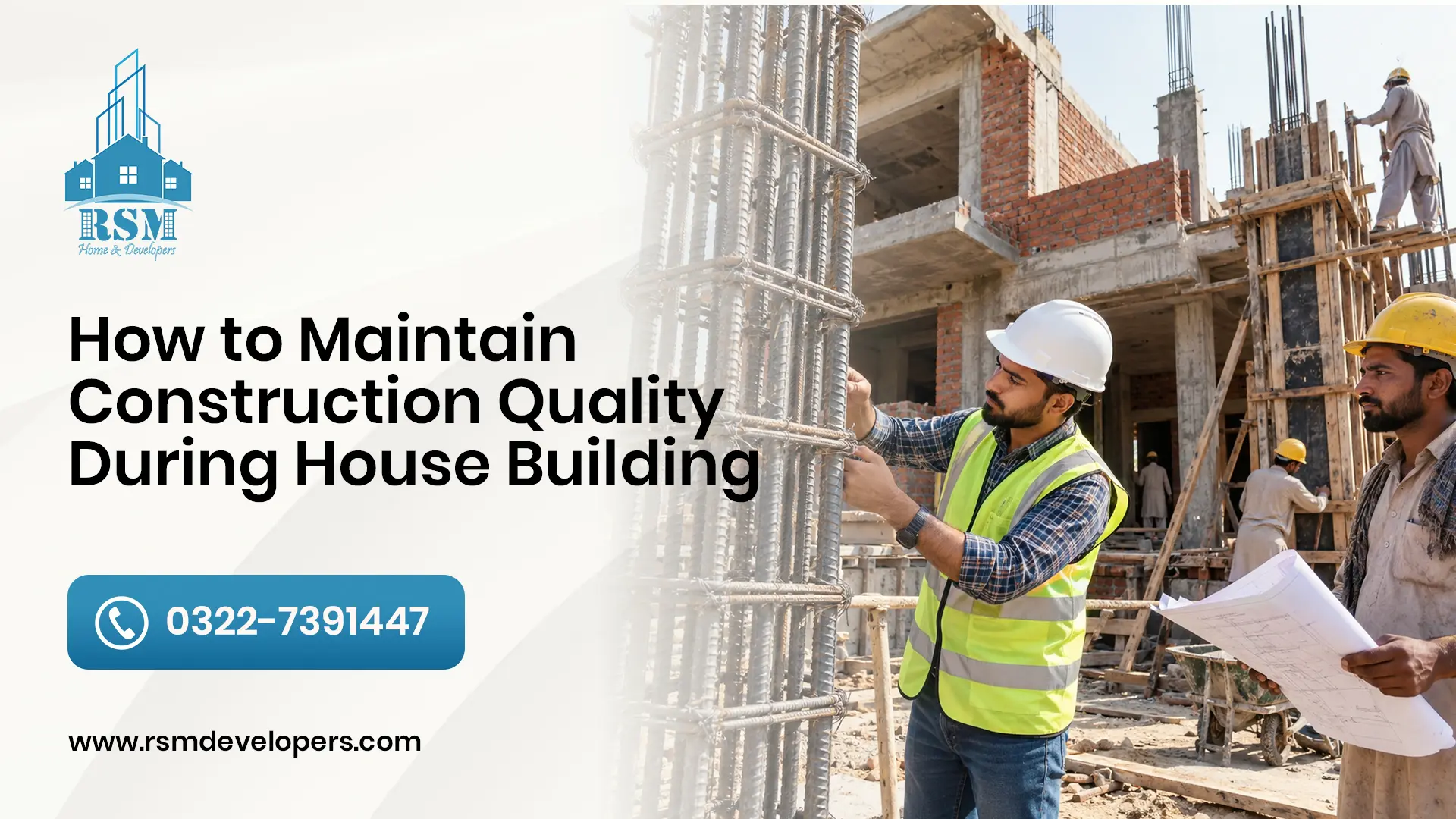
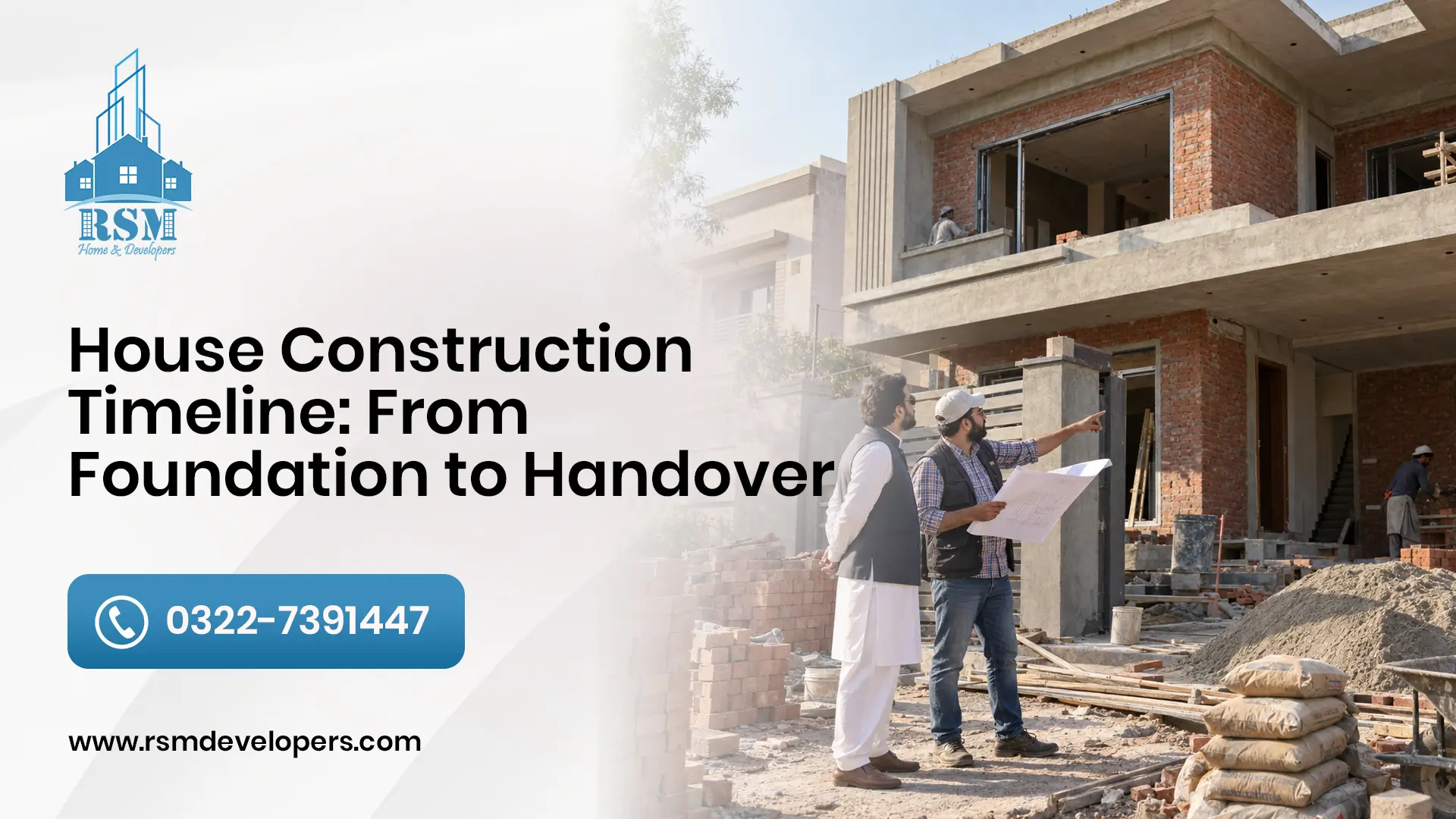
Building your own home is a major investment of time and money. Whether you are constructing a 5 marla house in Lahore or a 10 marla house in Islamabad, knowing how long each construction stage takes can help you plan your budget and avoid unnecessary delays.
Many homeowners in Pakistan begin construction without a clear schedule. This can lead to material shortages, payment issues, and unexpected expenses.
This guide explains the complete house construction timeline, from planning and foundation work to grey structure, finishing, and final handover.
The estimates below are general guidelines. Actual construction time depends on the covered area, number of floors, weather, design, material availability, and contractor performance.
How Long Does It Take to Build a House in Pakistan?
A typical residential house may take around 8 to 14 months from planning to handover. Simple projects may take less time, while larger or customized homes can take longer.
Here is an overview of the estimated construction schedule for a typical house.
| Construction Stage | Estimated Time |
|---|---|
| Planning and Approvals | 1–3 months |
| Site Preparation | 1–2 weeks |
| Foundation | 3–5 weeks |
| Grey Structure | 2–4 months |
| Roofing and Waterproofing | 2–4 weeks |
| Electrical and Plumbing | 3–6 weeks |
| Plastering | 3–5 weeks |
| Flooring and Tiling | 3–5 weeks |
| Doors, Windows, and Woodwork | 3–6 weeks |
| Painting and Finishing | 3–5 weeks |
| Final Inspection and Handover | 1–2 weeks |
Some activities overlap, so the total project duration is usually shorter than adding every stage together.
Stage 1: Planning and Approvals (1–3 Months)
Proper planning is the foundation of a successful construction project. Before starting work, finalise your design, budget, and construction schedule.
Important tasks include:
- Confirming plot ownership and property documents.
- Hiring an architect and structural engineer.
- Finalising architectural and structural drawings.
- Preparing a detailed construction budget.
- Selecting a reliable contractor.
- Obtaining the required building approvals.
In Pakistan, approval requirements depend on the location. You may need permission from the Capital Development Authority (CDA), a local development authority, a municipal body, or your housing society.
Set aside a contingency allowance of around 10–15% of your estimated budget where possible. This can help cover unexpected expenses and price changes.
Tip: Avoid changing the floor plan after construction begins. Design changes can increase both costs and completion time.
Stage 2: Site Preparation (1–2 Weeks)
Before construction starts, the plot must be prepared for building work.
Workers clear rubbish and vegetation, level the ground where necessary, and mark the house layout according to approved drawings. Temporary water and electricity arrangements may also be required.
Soil testing helps the engineer determine the appropriate foundation design. Plots with weak soil, uneven ground, or groundwater issues may require additional preparation.
Heavy monsoon rainfall can also delay excavation and site preparation in many parts of Pakistan.
Tip: Confirm plot boundaries and building measurements before excavation to avoid costly mistakes.
Stage 3: Foundation Construction (3–5 Weeks)
The foundation transfers the weight of the house safely to the ground. Its design depends on soil conditions, building size, and structural requirements.
This stage generally includes:
1. Excavation according to structural drawings.
2. Preparation of the foundation base.
3. Placement of reinforcement steel.
4. Formwork and concrete pouring.
5. Construction of foundation elements.
6. Waterproofing and backfilling where required.
Concrete needs proper curing to develop strength. The curing period and the time before additional loads are applied must follow the concrete specifications and structural engineer’s instructions.
Rain, groundwater, and material shortages can extend this stage.
Tip: Check reinforcement placement and other required details before concrete is poured. Never compromise structural quality to save time.
Stage 4: Grey Structure Construction (2–4 Months)
The grey structure is a major part of the house construction process in Pakistan. It generally includes the main structural framework, slabs, masonry, and other agreed structural work.
Common activities include:
- Columns, beams, and roof slabs.
- Brick or block masonry.
- Staircase construction.
- Lintels and related structural elements.
- Concealed electrical conduits and plumbing pipes.
A double-storey house may take longer than a single-storey house because of the additional structural work involved.
The quality of cement, steel, bricks, and aggregates is important. Proper supervision also helps prevent defects and unnecessary rework.
Tip: Arrange inspections at important construction milestones and ensure that the work follows approved structural drawings.
Stage 5: Roofing and Waterproofing (2–4 Weeks)
Once the relevant structural work is complete, the roof must be protected against water penetration.
This stage may include roof drainage slopes, waterproofing membranes or coatings, treatment of joints, and insulation where required.
Roof waterproofing is particularly important in areas affected by monsoon rainfall. Poor waterproofing can cause leakage, damp patches, and damage to interior finishes.
Allow the waterproofing system to be installed and tested according to its specifications before covering it with subsequent layers.
Tip: Do not ignore roof drainage. Proper slopes and functional outlets help prevent standing water and leakage problems.
Stage 6: Electrical and Plumbing Work (3–6 Weeks)
Electrical and plumbing installations usually progress alongside the grey structure and wall preparation.
Electrical work includes wiring, conduits, switches, sockets, lighting points, distribution boards, and earthing.
Plumbing work includes water supply lines, drainage pipes, bathroom fittings connections, kitchen plumbing, and water tank connections.
Air conditioning and ventilation provisions should also be planned if required.
Before walls are plastered, check the locations of switches, sockets, taps, drains, and other service points against the drawings.
Tip: Test concealed plumbing and inspect electrical installations before covering them. Repairs become more expensive once the walls are finished.
Stage 7: Plastering and Wall Preparation (3–5 Weeks)
Plastering gives walls and ceilings a smooth surface for painting and other finishes.
Workers prepare the surfaces, apply plaster, and level the walls. The plaster then needs sufficient time to cure and dry before the next stage.
Humidity, ventilation, and weather conditions can affect drying time. Painting over damp plaster may cause peeling, stains, or other finishing problems.
Tip: Check wall alignment and surface quality before painting begins. Follow the recommended drying times for the plaster and paint products.
Stage 8: Flooring and Tiling (3–5 Weeks)
Flooring and tiling improve the appearance and functionality of the house.
Common materials in Pakistan include ceramic tiles, porcelain tiles, marble, and granite. Bathrooms and kitchens usually require suitable water-resistant finishes.
This stage includes surface preparation, tile installation, grouting, skirting, and bathroom wall tiling where applicable.
The duration depends on the floor area, tile design, availability of materials, and installation complexity.
Tip: Order tiles early and check their colour and batch consistency. Keep some extra tiles for cutting, breakage, and future repairs.
Stage 9: Doors, Windows, and Woodwork (3–6 Weeks)
This stage includes installing doors, windows, wardrobes, kitchen cabinets, and other woodwork.
Custom-made cabinets and doors can take several weeks to manufacture. Window systems may also require advance ordering and accurate measurements.
Plan these items before finishing begins so they arrive when the site is ready.
Tip: Finalise kitchen layouts, cabinet designs, window specifications, and hardware early to avoid last-minute changes.
Stage 10: Painting and Final Finishing (3–5 Weeks)
Painting and finishing give the house its final appearance.
Typical activities include:
- Surface preparation and primer.
- Applying paint to walls and ceilings.
- Installing lights and switches.
- Fitting taps and sanitary accessories.
- Completing touch-ups and minor repairs.
Surfaces must be sufficiently dry before painting. The type of paint, number of coats, and weather conditions can affect the schedule.
Tip: Approve paint colours and material samples before purchasing large quantities. Protect finished floors and cabinets during the remaining work.
Stage 11: Final Inspection and Handover (1–2 Weeks)
Before accepting the completed house, inspect the work carefully.
Use this checklist:
- Test taps, drains, and water supply.
- Check switches, lights, and electrical sockets.
- Inspect walls, ceilings, floors, and paintwork.
- Open and close all doors and windows.
- Check tiles, grouting, and visible finishes.
- Test installed pumps and water heaters.
- Collect warranties, manuals, drawings, and bills.
Prepare a written snag list of incomplete work or defects. Ask your contractor to resolve these issues according to your agreement.
Complete the handover after the agreed work is finished and the required documentation is provided.
Why Do House Construction Projects Get Delayed?
Construction delays are common in Pakistan. Some of the main reasons include:
Weather:
Heavy rain can interrupt excavation, concrete work, and material transport.
Material shortages:
Delayed deliveries of cement, steel, tiles, or fixtures can stop progress.
Design changes:
Changes to the floor plan or finishing materials can cause additional work.
Labour problems:
A shortage of skilled workers or poor coordination between teams can slow construction.
Payment delays:
Insufficient cash flow can interrupt labour and material payments.
Approval issues:
Missing documents or drawing revisions can delay the start of work.
Planning ahead and communicating regularly with your contractor can reduce many avoidable delays.
Tips to Complete Your House Construction on Time
Follow these practical steps to keep your project organised:
1. Finalise architectural and structural drawings before construction.
2. Hire an experienced contractor and sign a written agreement.
3. Set realistic completion dates for each major stage.
4. Order long-lead materials, including tiles and windows, early.
5. Keep funds available for scheduled payments and unexpected expenses.
6. Visit the site regularly and review progress with your contractor.
7. Arrange professional inspections at important stages.
8. Allow adequate time for concrete curing, waterproofing, and plaster drying.
A weekly progress review can help you identify problems before they affect the overall construction schedule.
Final Thoughts
Understanding the house construction timeline in Pakistan helps you plan your budget, coordinate workers, and monitor progress from foundation to handover.
Start with approved drawings, choose a reliable contractor, and order materials according to your schedule. Allow for weather-related delays and never compromise on structural quality or proper curing.
With careful planning and regular supervision, you can reduce avoidable delays and move into a well-built home with greater confidence.
Frequently Asked Questions
1. How long does it take to build a house in Pakistan?
A typical house may take around 8–14 months from planning to handover. The duration depends on the covered area, number of floors, approvals, weather, and finishing choices.
2. How long does a 5 marla house take to build?
A 5 marla house may take approximately 6–10 months of construction, depending on its covered area, number of floors, labour availability, and finishing level. Planning and approval time may be additional.
3. How long does a 10 marla house take to build?
A 10 marla house may take approximately 8–14 months or longer from planning to completion. Complex designs and premium finishing can extend the schedule.
These figures are general estimates rather than guaranteed completion dates.
4. How long does the grey structure take?
The grey structure of a typical house may take around 2–4 months, depending on its size, number of floors, structural design, and weather.
5. Which season is best for house construction in Pakistan?
The best time depends on your region. Dry weather can help with excavation and outdoor work, while monsoon rainfall may cause delays. Extreme summer heat also requires careful concrete placement and curing practices.
6. What should I check before taking the handover?
Test electrical and plumbing systems, inspect the finishes, check doors and windows, prepare a snag list, and collect all agreed documents and warranties.